Contact@PowerXchanger.com
1 (310) 980-4061
PowerXchanger  |  SKU: UX-3K

UX-3K | 2700W/12A | Step-Up Voltage & Frequency Converter – 240V/60Hz to 220V/50Hz

Regular price $1,895.00 USD


Model: UX-3K

Input voltage: 240V
Input frequency: 45Hz - 70Hz

Output voltage: 200V/220V/230V/240V (Selectable)
Output frequency: 50Hz or 60Hz (selectable)

Capacity: 2700W (12.5 Amp (Requires Dedicated 240V Input Power))
Maximum Output Current: 12.5 Amp (Requires Dedicated 240V Input Power)

Your application power requirement should not exceed maximum output current.

Required Wall-Outlet type: NEMA 6-20 R (20 Amps)
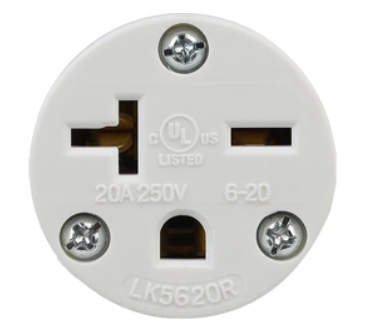
Required wall outlet type

View UX-3K Specifications

Available Capacities

in Step Up (UX) Series

A table comparing the facets of 4 products
Facet
UX-1K | 900W/4A | Step-Up Voltage & Frequency Converter – 120V/60Hz to 220V/50Hz
View details
UX-1.5K | 1350W/6A | Step-Up Voltage & Frequency Converter – 120V/60Hz to 220V/50Hz
View details
UX-2K | 1800W/8A | Step-Up Voltage & Frequency Converter – 120V/60Hz to 220V/50Hz
View details
UX-3K | 2700W/12A | Step-Up Voltage & Frequency Converter – 240V/60Hz to 220V/50Hz
View details
Model
Model
UX-1K
UX-1.5K
UX-2K
UX-3K
Price
Price
Regular price $1,150.00 USD
Regular price $1,395.00 USD
Regular price $1,595.00 USD
Regular price $1,895.00 USD
Weight
Weight
14 lb
15.5 lb
17.6 lb
19 lb
Product Dimensions
(L x H x W)
Product Dimensions
(L x H x W)
15in x 8in x 7in
18in x 8in x 7in
20in x 8in x 7in
20in x 8in x 7in
Current
Current
4.2 Amp
6.3 Amp
8.4 Amp
12.5 Amp (Requires Dedicated 240V Input Power)
Capacity
Capacity
900W/1000VA
1350W/1500VA
1800W/2000VA
2700W/3000VA *
Output Peak Current (<250mS)
13 Amp
20 Amp
27 Amp
37 Amp
Maximum Peak Load
Maximum Peak Load
1200W
1800W
2400W
3600W
Wall Outlet Required
null
null
null
null

UX-3K

Outstanding performance & reliability, the unique benefits of the UX Step Up voltage & Frequency Converter
Overview
This series is a double conversion Power Converter which produces stable pure sine wave voltage and frequency output (O/P). With this Converter, you can protect your equipment from most power issues, including power sags, power surges, brownouts, and line noise. With the common neutral topology, the converter provides internal connection from AC I/P neutral to AC O/P neutral; thus, it does not need to use an isolation transformer to provide 0 volt from AC I/P neutral to O/P neutral. This feature will reduce the interference to loads of communication or video systems.
Features
  • Outstanding Performance & Reliability
  • Common Neutral, Double Conversion Topology (0/P Neutral to 1/P Neutral is O volts normally)
  • Wide Range Input Window and Input Power Factor Correction
  • Low Noise, Smart Cooling Fan Design
  • High Efficiency, New Full-bridge Inverter Design
  • Automatic Restart After Overload Shutdown
  • AC Input Generator Compatible
  • Multifunction LCD Screen
Specification
Models UX-3K
Output
Output capacity 2700W/3000VA *
Output voltage 200V/220V/230V/240V (Selectable)
Maximum output current 12.5 Amp (Requires Dedicated 240V Input Power)
Output peak current 250ms 37 Amp
Maximum continuous load 2700W
Maximum peak load 3600W
Voltage regulation ±2% of selected output voltage
Output frequency 50Hz or 60Hz (selectable)
Output frequency synchronization 60±0.01Hz or 50±0.01Hz (independent of input frequency)
Crest factor 3:1
Voltage waveform Sine Wave
Total harmonic distortion resistive load <2%
Total harmonic distortion reactive load <3%
Standby power 40W
Output emi filter N/A
Output rfi filter 30Mhz - 1000Mhz
Clamp level 390V Peak
Efficiency input to output >89%
Output Connection From Mains
Ground Input and Output Ground are Connected
Neutral Input and Output Neutral Connected (after EMC inductor ) Isolation Transformer is not required
Input
Nominal input voltage 240V
Input voltage range 180Vac ~ 285Vac (Requires Dedicated 240V Power)
Input current 20 Amp
Input frequency range 45Hz - 70Hz
Input neutral auto detect and correct No
Wall outlet type required NEMA 6-20 R (20 Amps)
Required wall outlet type
Phase Single
Noise filtering Full-Time EMI/RFI Filtering
Input emi filter 150Khz -30Mhz (class A)
Input rfi filter 30Mhz - 1000Mhz (class A)
Overcurrent protection input By Re-Settable; Overcurrent Protector
Power factor ≧ 0.98
Switch on surge in rush current <100A, 3mS
Voltage interruption ride through 10mS
Protection
Overcurrent protection output Overload Alarm Level: 100% ~ 129% (alarm after 1 minute delay, shutdown after 1 minute alarm); Overload Shutdown Level: 130% (shutdown after 2 second delay)
Short circuit protection Pulsating Type, 37A Peak; Auto-Restart time: 30 seconds
Over temperature protection When the temperature inside is over 76℃, the LCD will show the Over-Temperature Symbol. If the temperature continues rising to 85℃, the buzzer alert for high temperature is activated and the CPU will shut down the output voltage. The CPU will resume output voltage automatically once the temperature drops to 75℃ or lower.
Indicators and Alarms
Lcd display Displays Input Voltage, Output Voltage, Output Frequency, Temperature, Load Level. Selectable Output Voltage and Output Frequency
Indicator load level LCD Displays Current Usage Level of Total Available Capacity
Indicator overload LCD Shows Overload Symbol
Indicator over temperature LCD Shows Over-Temperature Symbol
Audible alarms Overload Alarm, Short-Circuit Alarm, Over-Temperature Alarm
Audible alarm overload Continuous Alarm
Audible alarm short circuit Every other 2 seconds, 32 beeps in 2 seconds
Audible alarm over temperature Every other 2 seconds, 32 beeps in 2 seconds
Environmental and Safety
Sealed solid state electronics No
Operating temperature Up to 1500 meters: 0℃ to 40℃ (32℉ to 104℉)
Transit storage temp -15℃ to 55℃ (5℉ to 131℉)
Relative humidity 5 – 95% Non-Condensing
Operating altitude 0 ~ 3000 Meters
Moisture sensitivity Internal Fan
Audible noise ≦45 dBA (at 1 meter from surface of unit)
Safety markings CE & BSMI
Cooling
Cooling method Forced Air Cooling by Internal Fan
Natural ventilation cooling No
Internal fans Internal fan will run at low speed continuously when the temperature inside is low. Fan speed increases as temperature rises. When internal temperature is over 60° C, the internal fan runs at full speed
External emergency cooling fan N/A
Physical
Product dimensions
(L x W x H)
20 in x 8 in x 7 in / 51 cm x 20 cm x 18 cm
Product weight 19 lb / 8.5 kg
Carton dimensions
(L x W x H)
28 in x 15 in x 17 in / 72 cm x 38 cm x 43 cm
Shipping weight 28 lb / 12.7 kg
Warranty, Quality Control, and International Approvals
Warranty 2 Years, Full Replacement
Quality control standard ISO9001
UL-ULus Not Applicable
UL 1012 Not Applicable
UL-cUL Not Applicable
DEMKO-CB Not Applicable
TUV/SUD-CB Not Applicable
FCC Part 15 Not Applicable
EMC Not Applicable
Other
Standard accessories None
Wall mountable No
Appliance mountable No
Compatibility
Output compatibility with ups Yes
Ac input generator compatible Yes

Voltage & Frequency Basics

Can I just install a European Outlet?

No. Changing the outlet shape doesn’t change frequency or voltage. U.S. mains is still 60Hz frequency and 120 volts.

Can I run a 50Hz motor on 60Hz supply?

Running a 50 Hz motor on a 60 Hz supply will make it run
about 20% faster. This can cause extra heat, vibration, and reduced torque
depending on the design. Some motors are built for both 50/60 Hz and will work
safely, while others may wear out quickly or fail.

To ensure proper performance and protect your equipment, we
recommend using a PowerXchanger frequency converter.

Can I run a motor (mixer, pump, compressor) on the wrong frequency?

Sometimes it runs but often with reduced torque and higher heat. If it matters, choose proper frequency conversion.

How do I know if I need a frequency converter or a voltage transformer?

A voltage transformer only changes the voltage, while a frequency converter changes both voltage and frequency.

If your equipment label shows it supports both 50/60 Hz, you usually only need a transformer to match the voltage. If it specifies a single frequency (50 Hz or 60 Hz only), then you will need a frequency converter to run it properly.

Always check the rating plate on your device to determine which solution is required.

How Do You Know If You Need a Frequency Converter?

To determine if you need a frequency converter, check the equipment label (usually near the power cord).

Look for something like:

120V ~ 60Hz
220–240V ~ 50Hz
100–240V ~ 50/60Hz

You need a frequency converter if:

  • The frequency (Hz) listed on your equipment does NOT match the country’s electrical frequency.
  • The label shows only one frequency (example: “60Hz only”).
  • The device uses a motor or timing mechanism.
  • The manual warns against using transformers alone.

You do NOT need a frequency converter if:

  • The label says: “50/60Hz”
  • The device is marked: “100–240V 50/60Hz” (universal input)
  • It’s a small charger, laptop, or switching power supply

When in doubt, send us a photo of the label to contact@powerxchanger.com. Our engineers review these daily.

What if my label says 50/60Hz?

Then the equipment is typically designed to tolerate both frequencies. You may only need voltage conversion. However, you still need to size correctly for watts, peak load, if it's rated for continuous power, and if it has enough in-rush surge capacity to meet your device's requirements.

What Is a Voltage and Frequency Converter (50Hz to 60Hz / 60Hz to 50Hz)?

A voltage and frequency converter is an electrical device that changes both voltage (e.g., 120V ↔ 220V) and electrical frequency (50Hz ↔ 60Hz) so equipment operates exactly as it was designed.

Most countries use either:

  • 120V / 60Hz (USA, Canada)
  • 220–240V / 50Hz (Europe, UK, Australia, Asia)

Many appliances, motors, audio systems, medical devices, and commercial equipment are built specifically for one voltage and one frequency. If the frequency is wrong, performance issues, overheating, timing errors, or permanent damage can occur.

Unlike a simple transformer, a true frequency converter:

  • Regenerates a brand-new sine wave
  • Produces stable output voltage
  • Converts 50Hz to 60Hz (or 60Hz to 50Hz)
  • Maintains clean, regulated power

PowerXchanger converters create pure sine wave regenerated power, meaning your equipment receives clean electricity, not just stepped voltage.

What is the difference between a voltage transformer and a frequency converter?

Voltage transformers adjust the voltage level (e.g., from 230 V down to 110 V), protecting your devices from overvoltage
damage.

Frequency converters ensure that the electrical frequency (50 Hz vs. 60 Hz) matches what your device was built for.

When Do You Need a 50Hz to 60Hz (or 60Hz to 50Hz) Frequency Converter?

You need a frequency converter when your equipment was designed for one frequency (Hz) and the country you’re using it in operates on a different frequency.

Common real-world scenarios:

  • 🇺🇸 Bringing 120V / 60Hz American appliances overseas (Europe, UK, Japan 50Hz regions, Australia)
  • 🇪🇺 Testing European 220V / 50Hz equipment in the United States
  • Expats relocating internationally
  • Audiophiles moving high-end USA audio gear abroad
  • Medical and laboratory equipment requiring exact frequency stability
  • Industrial motors, compressors, pumps, centrifuges
  • Commercial kitchen or laundry equipment

If your device contains:

  • Motors
  • Compressors
  • Pumps
  • Timers
  • Turntables
  • Washers/dryers
  • Precision electronics

Frequency matters — not just voltage.

Why does the frequency matter?

Because so many devices, from washing machines and CPAP
Machines to audio equipment, kitchen appliances, and tools all rely on precise
timing or motor speed governed by the mains frequency. Run a 60 Hz-designed
motor or compressor at 50 Hz, and it will spin slower, draw more current,
overheat, or fail altogether. Read more about Why Frequency Matters topic.

Product Selection & Application Scenarios

Can I use a PowerXchanger to convert 50Hz European equipment to operate in U.S. 60Hz factories?

Yes, that’s exactly what PowerXchanger is designed to do. It converts both the voltage and the frequency so your 50 Hz European equipment can run reliably on U.S. 60 Hz power at industrial and factory sites.

This ensures motors, tools, and sensitive electronics operate at their intended speed and performance. Always confirm the voltage and power rating of your equipment to choose the right PowerXchanger model.

I’m overseas and my device says “100–240V, 50/60Hz.” Do I need PowerXchanger or Transformer?

Often, no—many devices like laptop chargers already accept global power. But if you need 120V outlets, correct plug types, or you’re powering motorized/precision equipment, a converter can still be the right move.

Audiophile & Professional Audio Applications

Can I use U.S. 120V/60Hz audio gear in 230V/50Hz countries?

Often yes, but usually not with a basic plug adapter. At minimum you need the correct voltage, and depending on the equipment you may also need frequency-correct 60Hz output for best compatibility and performance.

Shipping

Do you ship to military addresses (APO/FPO/DPO)?

Yes. We ship to APO, FPO, and DPO military addresses via USPS. If you have any special instructions or requirements for delivery, feel free to include them at checkout or email us at contact@powerxchanger.com and we’ll be happy to assist.

How long will it take to receive my order?

Domestic (USA)

Ground Shipping: Orders are typically dispatched within 1–3 business days.

Expedited Shipping (Next Day Air, 2-Day Air, etc.): Orders received before 12:00 PM PST ship the same business day. Orders received after 12:00 PM PST may ship the following business day.

If it is after 12:00 PM PST and you require same-day dispatch, please contact us immediately at (310) 980-4061 or contact@powerxchanger.com and we will do our best to assist.

International Shipping

International orders are typically dispatched within 1–2 business days. Delivery typically takes 3–6 business days depending on the destination and customs processing time. Customers are responsible for all applicable taxes, duties, and import fees, which may be billed by the carrier or the local government agency.

What countries do you ship to?

We ship worldwide, except where prohibited by law, and we’re happy to work with you if shipping to your location requires special arrangements.

Returns and Refunds

How do I return a product?

To begin a return, please email us at contact@powerxchanger.com and include the following information:

  • Order Number
  • Order Date
  • Serial Number(s)
  • Condition of the product (unopened, opened, used, etc.)

For a full refund, items must be returned within 30 days of receiving your order. Products must be in the same condition in which they were received, unused, and include all original packaging, accessories, and manuals.

Used or opened items may be subject to a restocking fee if the unit is returned damaged, missing accessories, or missing any of the original packaging.

How long will it take to receive my refund?

Refunds are processed within 7 business days from when we receive the item(s).

Power, Performance & Technical Specifications

What Does “Continuous Operation” Mean and Why Is It Important?

Continuous operation means a converter is designed to run at its rated power output 24 hours per day without overheating, degrading, or shutting down.

Many low-cost transformers/converters online are:

  • Designed for short bursts
  • Rated using peak power numbers (not real continuous load)
  • Not built for all-day operation

True continuous-duty converters:

  • Use industrial-grade internal components
  • Have proper thermal management
  • Maintain stable voltage and frequency under load
  • Provide long-term reliability

This is critical for:

  • Audio systems
  • Medical equipment
  • Laboratory devices
  • Commercial appliances
  • Long laundry cycles
  • Industrial machinery

PowerXchanger converters are engineered for real-world, sustained use.

What Does “In-Rush Surge Capacity” Mean and Why Is It Important?

In-rush surge capacity refers to the large burst of power required when certain devices first start up.

Motors and compressors can draw:

  • 2x to 7x their rated running wattage
  • For a fraction of a second at startup

For example:

  • A 1,500W washing machine motor may require 4,000–6,000W at startup.
  • A refrigerator compressor may spike 3–5x its running load.

If a converter cannot handle this surge:

  • It may shut down
  • It may trip protection
  • It may fail permanently
  • Your equipment may not start

PowerXchanger units are engineered with high in-rush surge capacity specifically to handle:

  • Motors
  • Compressors
  • Laundry equipment
  • Audio amplifiers
  • Medical devices

This is one of the biggest differences between low-cost converters and industrial-grade continuous duty systems.

Why Do Some PowerXchanger converters have UL and CE certification and others have CE only?

We’re actually somewhat unique in that our Deluxe and Slimline Step-Down series carry UL, CE, and IEC certifications. The IEC certification is particularly valuable because it allows these models to be incorporated into a larger system and used as part of a joint certification. In other words, when paired with another device, the combined product can obtain international safety approvals more easily, something many manufacturing customers rely on when designing domestic equipment they also want available to global markets.

For our Step-Up Series (such as the UX-3K) and the EX Step-Down Series, we pursued CE certification because these models were originally engineered for international applications where CE compliance is the primary requirement. UL certification is optional for this category of power conversion equipment and CE certification fully covers the applicable safety and EMC standards for their intended markets.

If you have any specific compliance requirements for your facility or project, we’re happy to review them and confirm compatibility. Send us an email at contact@powerxchanger.com

Warranty, Reliability & Safety

Why Are Voltage Transformers So Cheap, and Why Are Voltage & Frequency Converters More Expensive?

A voltage transformer only changes voltage. It does not change frequency.

A transformer:

  • Steps 220V down to 120V (or vice versa)
  • Does NOT regenerate power
  • Does NOT convert 50Hz to 60Hz
  • Does NOT correct waveform distortion
  • Is essentially a passive copper coil device

A true voltage and frequency converter:

  • Converts AC → DC → back to AC
  • Regenerates a brand-new pure sine wave
  • Changes 50Hz ↔ 60Hz
  • Regulates output voltage
  • Includes protection circuitry
  • Handles in-rush surge loads
  • Is engineered for continuous duty

This requires:

  • Advanced power electronics
  • High-capacity heat management
  • Precision frequency control circuitry
  • Industrial-grade components
  • Extensive testing and burn-in processes

That is why industrial voltage and frequency converters cost significantly more than simple transformers.

You are not just buying voltage conversion — you are buying:

  • Frequency correction
  • Clean regenerated power
  • Protection for expensive equipment
  • Long-term reliability
  • Engineering built for serious applications